
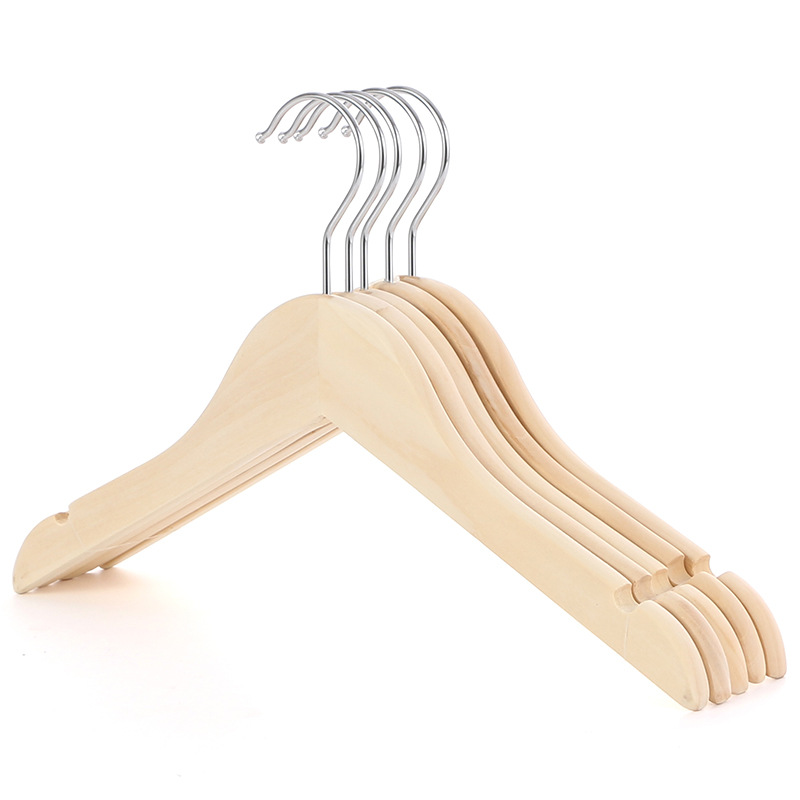
Most buyers only ever see the finished hanger in the carton. But knowing how a wooden hanger is actually made tells you everything about supplier quality – which factories to trust, why prices differ, and what to check before paying a deposit. Here is the complete process as it runs in our Guilin factory.
Why Guilin?
Guilin, in Guangxi province, is the historic center of China’s wooden products industry. The region combines plantation timber supply, generations of woodworking craftsmanship, and the logistics of southern China’s export ports. Most of China’s serious wooden hanger manufacturing happens within a couple hours of the city – which is why importers who want factory-direct prices end up here.
Step 1: Timber selection
Everything starts with the wood. We buy beech, rubberwood and cedar logs and sawn timber from vetted suppliers. Incoming lots are checked for:
- Wood species and grade (appearance, grain, knots)
- Moisture content (the target for stable production is 8-12%)
- Dimensions usable for the hanger blanks
Cheap suppliers skip this inspection and pay for it later in warped and cracked hangers.
Step 2: Kiln drying
Raw timber is air- and kiln-dried to bring moisture down to production spec. This step is invisible in the finished product but decides whether the hanger keeps its shape in a humid climate or a dry hotel room. Under-dried wood warps; over-dried wood cracks.
Drying takes days to weeks depending on species and thickness. It cannot be rushed – which is exactly why factories under delivery pressure sometimes skip it, and why “surprisingly cheap” hangers warp within months.
Step 3: Cutting and shaping
Dried timber goes to the cutting line:
- Sawing – boards cut to hanger-length blanks
- Molding – blanks shaped by molders into the hanger profile: shoulders, bar, edges
- Drilling – hook holes and trouser-bar sockets drilled to spec
- Punching and routing – notches for straps, clip mountings
Each model has its own tooling. A custom shape means new cutters and jigs – this is why custom models carry higher MOQ.
Step 4: Sanding
Hangers pass through progressively finer sanding – typically three passes. The result must be smooth to the touch with no fibers, ready to take finish. Sanding quality is immediately visible in the product: cheap hangers feel rough at the shoulder edge; quality hangers feel finished everywhere including underneath.
Step 5: Finishing
Depending on the model:
- Natural wax/oil – keeps the wood look and feel, food-safe on kitchenware lines
- Lacquer (clear or colored) – white, black, walnut and custom colors; each color is a separate batch
- Paint – for fashion retail colors, matched to Pantone references
Finishing is done in ventilated finishing rooms with drying time between coats. Color matching against the client’s brand standard is confirmed on a pre-production sample.
Step 6: Hardware assembly
Hooks, clips and swivels are assembled onto the body:
- Hooks (metal or wood-look) are screwed and pull-tested
- Clips are attached with correct spring tension – firm on fabric without marking it
- Trouser bars are glued and clamped into their sockets
Hardware is where cheap factories cut corners most visibly: thin wire clips that lose tension, chrome-plated hooks that rust. Ask what metal grade is used – we use standard steel/zinc-alloy with proper plating for humidity resistance.
Step 7: Logo application
For OEM orders: silk-screen printing, hot-stamping foil, or laser engraving on the shoulder or bar. Laser is the most durable; print offers full color.
Step 8: 100% inspection and packing
Every hanger is inspected before packing – finish, hardware, function, dimension spot-checks. Rejected pieces never leave the factory. Then:
- Polybag or sleeve per unit (or bare, per client spec)
- Inner boxes, then export cartons
- Cartons marked with model, quantity and order reference
Packing can be retail-ready: printed sleeves, hang tags, barcodes – all defined in your specification.
What this process means for buyers
When you compare quotes, compare these process points, not just price:
| Check | Why it matters |
|---|---|
| Kiln-dried, moisture-verified timber | prevents warping in your climate |
| Sanding passes | the tactile quality your customers feel |
| Finish type and plating | durability and appearance retention |
| Hardware pull tests | hooks and clips that survive daily use |
| 100% inspection | defect rate near zero on arrival |
A factory that can describe its own process in this detail – and let you see it by video call or visit – is a factory you can wire a deposit to. That is the standard we hold at XINQI in Guilin since 2005.
FAQ
Can I visit the factory before ordering?
Yes – video call or in person. Any real manufacturer welcomes both; “factory visits not possible” is a trading company signal.
How long does production take?
Standard models: 20-30 days after deposit. Custom finishes or new tooling: 30-40 days. Samples: 7-10 days before that.
Do you make the hooks and clips too?
Hooks and clips are sourced from specialized hardware partners to spec, then assembled and tested in-house – standard practice across the industry.
What quality checks apply to my order?
100% piece-by-piece inspection before packing, plus third-party pre-shipment inspection on request (SGS/BV or your agent).
See our products, then our process
- Wooden hanger collection
- Wooden vs plastic hangers – what retailers say after switching
- Full sourcing guide: How to Import Wooden Hangers from China
