
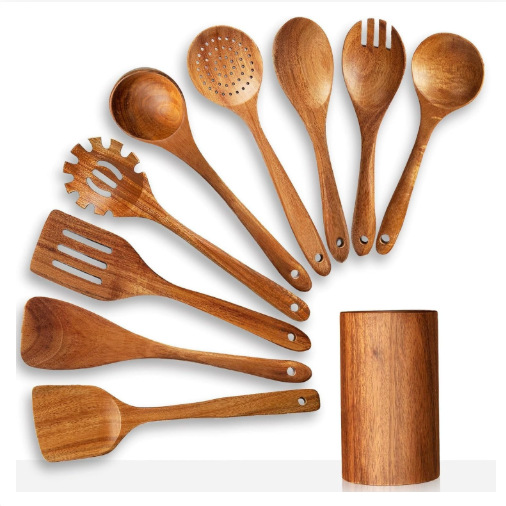
Wooden spoons, spatulas and cutting boards have been used for thousands of years – and then plastic arrived and we all forgot. Now wooden kitchenware is back, and buyers rightly ask: is wood actually food safe?
The short answer: yes, when the wood is properly selected, finished and cared for. Here is what “properly” means, from the factory floor.
What makes a wooden utensil food safe
1. The wood itself
Food-contact wooden utensils are made from dense, closed-grain hardwoods. At our factory that means:
- Acacia – dense, naturally water-resistant, rich grain
- Beech – smooth, uniform, takes food-safe finishes beautifully
- Rubberwood – affordable plantation hardwood for value lines
Open-grained woods (oak) and softwoods (pine) trap food particles and moisture in their grain, so they are avoided for utensils. Bamboo is technically a grass and is used laminated.
None of these woods contain naturally occurring compounds harmful for food contact in normal use – they have been used in kitchens for centuries.
2. The finish (this is where quality is decided)
An unfinished wooden utensil is technically usable but ages fast: it stains, cracks and absorbs water. Good manufacturers apply food-grade finishes:
- Food-grade mineral oil / sealing oil – the standard for cutting boards and utensil handles. Look for compliance with FDA 21 CFR 175 or EU food contact regulations.
- Food-safe lacquer or varnish – a hard transparent coating on colored or lacquered lines, also food-grade certified.
- None at all – some premium lines ship raw, with instructions to oil at home.
The critical question for wholesale buyers: ask for the finish’s food-contact certification, not just the wood’s. This is the difference between a safe product and a cheap one.
3. The moisture content
Wood dried to the correct moisture content (typically 8-12%) is dimensionally stable. Badly dried wood cracks in use – and cracks are where bacteria hide. Professional factories kiln-dry every batch and verify moisture before production.
Hygiene: wood vs plastic
Multiple studies (including classic research on wooden vs plastic cutting boards) found that wood’s natural properties actually inhibit bacterial survival: bacteria sink into the wood grain and die as the wood dries, while plastic boards’ knife scars remain contaminated after washing.
Practical rules for consumers:
- Wash wooden utensils by hand with warm soapy water – not dishwasher (heat and water ruin the finish and warp the wood).
- Dry them standing up or on a rack, never soaking in the sink.
- Re-oil boards and handles when they look pale or dry.
- Retire any utensil with deep cracks.
What buyers should verify when sourcing
When importing wooden kitchenware, put these in your specification:
- Wood species and moisture content range
- Finish type with food-contact certificate (FDA / EU / LFGB as your market requires)
- Surface sanding grade (smooth, no fibers)
- No filler or repair putty on food-contact surfaces
- Packaging that keeps products dry in transit
A reputable factory supplies test reports and finish certifications as a matter of course. If a supplier cannot document their finish’s food-contact compliance, treat it as a red flag.
FAQ
Are wooden spoons safe for nonstick pans?
Yes – wood is the gentlest material for nonstick coatings, which is exactly why chefs use wooden spatulas on them.
Can wooden utensils go in the dishwasher?
No. Dishwashing strips the finish, warps the wood and shortens life dramatically. Hand wash only – it takes seconds.
How do I disinfect a wooden cutting board?
Wash with hot soapy water, then wipe with white vinegar or a salt-and-lemon treatment. Let it dry fully and re-oil monthly.
Do wooden utensils harbor bacteria?
No more than plastic – and studies suggest less, because bacteria do not survive in dry wood grain. Cracked or badly finished wood is the exception, which is why finish quality matters.
Food-safe wooden kitchenware from XINQI
We produce acacia and beech kitchen utensils in Guilin, China with food-grade finishes and full documentation for your market. Browse our collections, order samples, and verify the finish quality in your own hands.
- Acacia wood kitchen tools
- Beechwood kitchen tools
- Choosing between woods: Acacia vs Beech Wood Kitchen Utensils
