
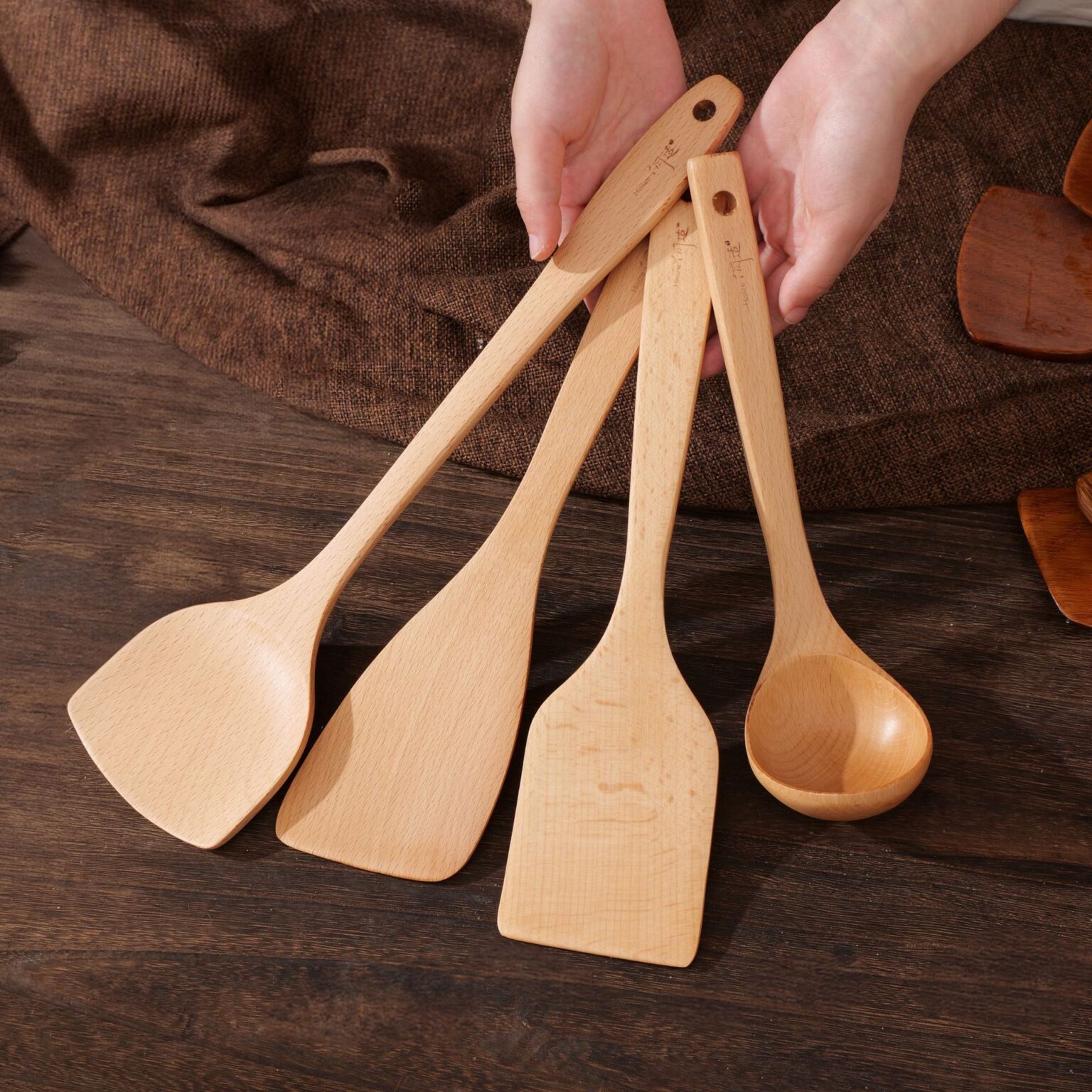
Wooden kitchen utensils are riding a wave of demand as consumers move away from plastic. If you are developing a wooden kitchenware line, the first decision is wood species. The two most common options – acacia and beech – each have distinct strengths, and the right choice depends on your brand positioning, price point and target customer.
Acacia wood: rich looks, natural water resistance
Acacia is a fast-growing hardwood with dramatic grain patterns and warm honey-to-chocolate tones. Its natural oils make it more water-resistant than most woods, which is why it dominates the premium end of wooden kitchenware.
Strengths:
- Striking, varied grain – every piece looks unique, which photographs beautifully for retail and social
- Natural water and stain resistance from its oils
- Very high hardness (acacia is harder than beech and oak) – resists dents and scratches
- Naturally antibacterial surface properties
- Works well with simple oil finishes that keep the natural look
Trade-offs:
- Higher cost than beech, and supply can vary – acacia grain varies so tightly specified appearance needs extra sorting
- The varied grain that looks artisan in a premium line looks “inconsistent” in a strict uniform line
- Harder wood means slightly slower machining, reflected in price
Best for: premium retail lines, gift sets, brands selling “natural artisan” positioning, and dark/neutral kitchen aesthetics.
Beech wood: uniform, affordable, food-safe workhorse
Beech is the quiet professional of kitchenware. Pale, fine-grained and extremely uniform, beech is used across Europe for utensils, boards and food-contact wood.
Strengths:
- Uniform, consistent appearance – ideal for strict brand lines where every piece must look the same
- Takes food-safe finishes beautifully: natural oil, clear lacquer, or full color (white, black, sage…)
- Hard, dense and durable – suitable for daily-use utensils
- Excellent cost-to-quality ratio for volume programs
- Reliable supply and stable pricing
Trade-offs:
- Paler, less dramatic grain – “clean” rather than “artisan” in look
- Slightly less water-resistant than acacia, so finish quality matters more for boards and frequently-washed items
Best for: mid-market retail, food-service and kitchen uniformity, brands that want color-matched or painted utensils, and high-volume programs where cost efficiency matters.
Side-by-side comparison
| Feature | Acacia | Beech |
|---|---|---|
| Grain | bold, varied, artisan | fine, uniform, clean |
| Hardness (Janka, approx.) | ~1,700+ lbf | ~1,300 lbf |
| Water resistance | naturally high | medium – depends on finish |
| Color options | natural look primarily | takes color/lacquer well |
| Food safety | excellent with food-grade oil | excellent with food-grade finish |
| Price | higher | more economical |
| Best positioning | premium / artisan | value / uniform / colored |
Food safety: both pass, finishes decide
Both woods are food-contact safe with proper finishing. What actually determines safety is the finish: food-grade mineral oil or certified food-contact lacquer (FDA 21 CFR / EU compliant). A cheap, uncertified lacquer on premium wood is worse than a proper oil finish on modest wood. When sourcing, always request the finish certification for your market. We cover this in detail in Are Wooden Kitchen Utensils Food Safe?
Practical sourcing advice
- Order samples of both woods in your actual product shape – flat photos hide the tactile difference.
- Test your finish in real use: wash cycles, staining foods (turmeric, tomato), heat contact.
- Match wood to line, not to product: premium gift line in acacia, everyday value line in beech – many brands run both successfully.
- Specify moisture content (8-12%) to avoid cracking in dry or humid destination climates.
- Plan packaging per wood: acacia’s varied tones benefit from window boxes showing the grain; beech suits printed sleeves.
FAQ
Which wood is better for cutting boards?
Acacia’s water resistance gives it an edge for boards that stay wet; beech boards are equally popular with proper sealing. Both are proven materials.
Which is more sustainable?
Both are responsible choices: acacia is fast-growing, beech comes largely from managed European and Asian plantations. Ask for FSC-certified supply if your brand requires documentation.
Can I mix both woods in one product line?
Yes – a common approach: acacia for hero/premium SKUs and beech for the everyday range, clearly segmented by price tier.
Which is cheaper at wholesale?
Beech, typically by a noticeable margin, especially at volume. Acacia’s premium look usually supports a higher retail price that more than covers the cost difference.
Choose your wood with samples
We manufacture both acacia and beech kitchen tools in Guilin, China with food-grade finishes and export documentation for your market.
- Acacia wood kitchen tools collection
- Beechwood kitchen tools collection
- Related: Wooden vs Plastic Hangers for the same material logic in hangers
